A motor-core supplier should be evaluated on more than quoted price. Buyers need evidence that the supplier can understand the drawing, control the manufacturing route, validate samples and reproduce the approved result with traceable records.
Confirm the manufacturer and production scope
Start by checking the company named on quotations, contracts, certificates and export documents. Confirm that the stated manufacturing processes and certificate scope match the product being sourced.
For Shuaijin projects, buyers can review the published factory process, certificate images and order-specific production route before sample approval.
Match capability to the actual drawing
A general equipment list is not enough. The supplier should review the required material, thickness, geometry, tolerance, assembly format and expected volume. Ask how the part will be slit, stamped, heat treated, assembled and inspected, and which steps require project-specific tooling or approval.
For non-standard parts, assess whether the supplier can support drawing review, die design and fabrication, trial stamping, sample inspection and the transition to repeat production. The response should identify technical risks rather than simply confirm that every requirement is possible.
Review current certificates and their scope
Certificates should be checked for the issuing organization, Shuaijin company name, site address, standard, scope and validity period. A certificate is useful only when its scope is relevant to the supplied product and the document is current.
Examine sample approval and inspection controls
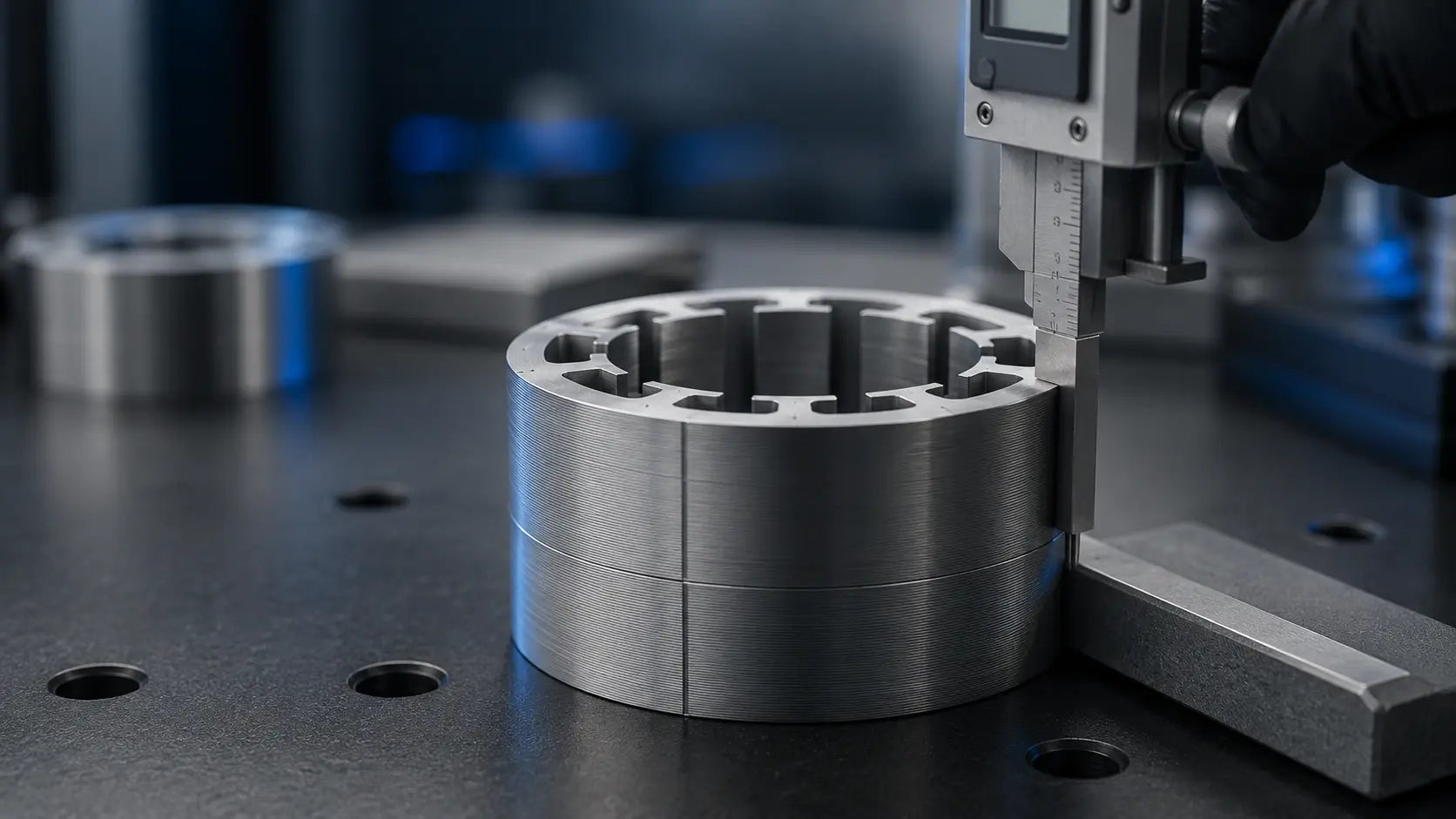
The supplier should explain how dimensions, burr, flatness, stack height, appearance and any agreed magnetic characteristics are checked. Ask what equipment is used, how inspection frequency is defined and how records are linked to the order.
A strong sample process includes documented drawing revision, material definition, sample quantity, measurement results, buyer review and sign-off. Volume production should not begin until the approved configuration and acceptance criteria are clear.
Check traceability, capacity and change control
Published capacity figures should be treated as a starting point, not a guarantee of available capacity for a specific order. Buyers should confirm tooling status, planned volume, production schedule and delivery destination during quotation.
Also ask how material lots, production orders, inspection records and packing are identified. Changes to material, tooling, process or subcontracted operations should follow an agreed communication and approval route.
Supplier-qualification checklist
- Manufacturer and production scope confirmed
- Relevant process capability matched to the drawing
- Current certificates reviewed for scope and validity
- Tooling ownership and maintenance responsibility defined
- Sample and approval gates documented
- Inspection equipment and record retention explained
- Material and order traceability demonstrated
- Capacity, lead time, packing and export responsibilities confirmed
Qualify the project route, not only the factory
The most useful supplier review connects factory capability to one real requirement. A clear RFQ and controlled sample project reveal how the supplier communicates, handles technical questions, records decisions and prepares for repeat supply.
Starting supplier qualification?
Send your drawing, material requirement, quantity and qualification checklist for a project-specific response.
CONTACT SHUAIJIN ↗