Motor-core manufacturing is a controlled chain rather than a single stamping operation. Material preparation, tooling, forming, heat treatment, assembly and inspection must be aligned with the drawing and the required delivery format.
1. Define the material and delivery format
The route begins with the buyer's drawing or physical sample, application, material requirement, thickness, tolerances and estimated volume. The supplier should also confirm whether the order requires loose laminations, stacked stator or rotor cores, EI/UI laminations, segmented components or another assembled format.
Material identification and storage controls are important because different electrical-steel grades and thicknesses cannot be treated as interchangeable. Coil records, zoning and project references help maintain traceability from incoming material to the production order.
2. Prepare strip and tooling
Wide coil may be slit into narrower strip before stamping. Strip width, edge condition, thickness and coil handling should match the tooling route. For a new geometry, the engineering team reviews manufacturability, strip layout, critical features and the proposed tool before samples are produced.
Tooling decisions depend on geometry, tolerance, production volume and the required validation speed. A sampling route may differ from the eventual volume-production tool, so the transition criteria should be defined clearly.
3. Control precision stamping
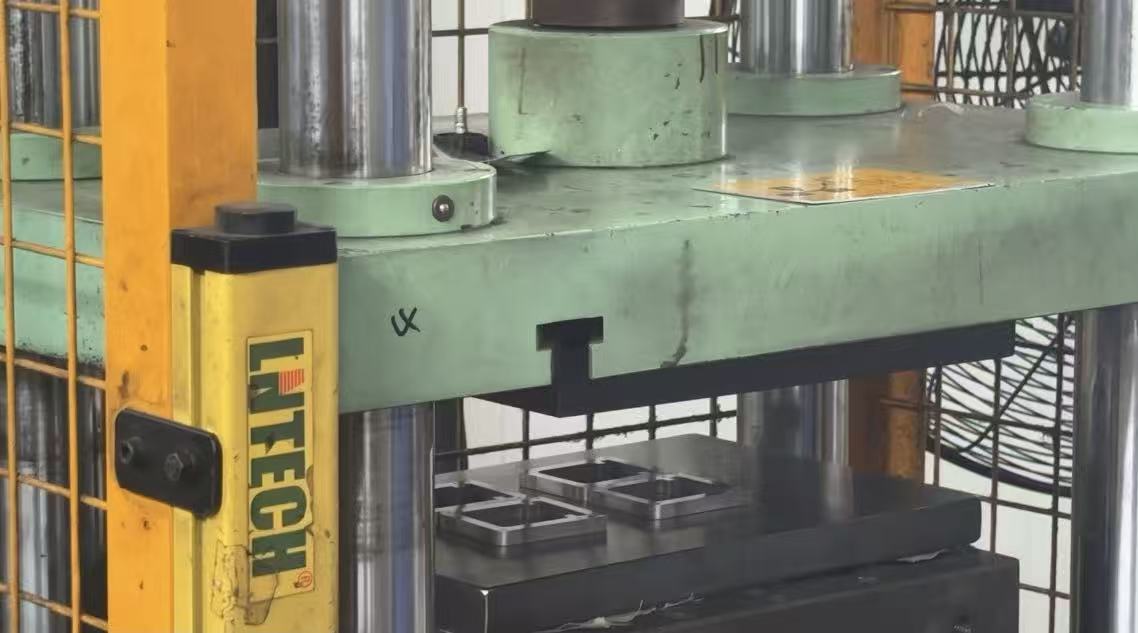
During stamping, the production team controls strip feeding, tool condition, part separation and in-process measurements. Burr, flatness, concentricity and feature dimensions require attention because small deviations can accumulate when laminations are stacked.
Repeat production also requires a defined inspection frequency and a response plan for tool wear or dimensional drift. The objective is not simply to make an acceptable first part, but to keep the approved geometry stable across the production lot.
4. Apply annealing only when the route requires it
Forming can introduce stress into electrical steel. A specified annealing route may be used to support stress relief or agreed magnetic-property requirements. Parameters should be defined for the project rather than assumed from another product. Not every component follows the same heat-treatment route, and the buyer and supplier should agree what evidence or checks are required.
5. Assemble and inspect the core
Depending on the design, laminations may be delivered loose or assembled through interlocking, riveting, welding, bonding or another approved method. Stack height, alignment and assembly integrity should be checked against the drawing and the agreed sample.
Final inspection may include dimensions, appearance, burr condition, stack height, packaging and agreed performance checks. Inspection records should be linked to the order so that the delivered lot can be reviewed during supplier qualification or repeat purchasing.
Recommended approval gates
- Requirement pack complete
- Manufacturing feasibility confirmed
- Tooling and sample route approved
- Sample dimensions and agreed tests reviewed
- Buyer sign-off recorded
- Volume-production and inspection plan released
A controlled route reduces avoidable rework
Clear approval gates prevent the project from moving into volume production while material, tooling, dimensions or inspection expectations remain unresolved. For overseas programs, the same discipline also improves communication, documentation and repeat-order consistency.
Need a drawing-based production review?
Share the drawing, material, tolerances, delivery format and estimated quantity with the Shuaijin engineering team.
SEND PROJECT DETAILS ↗